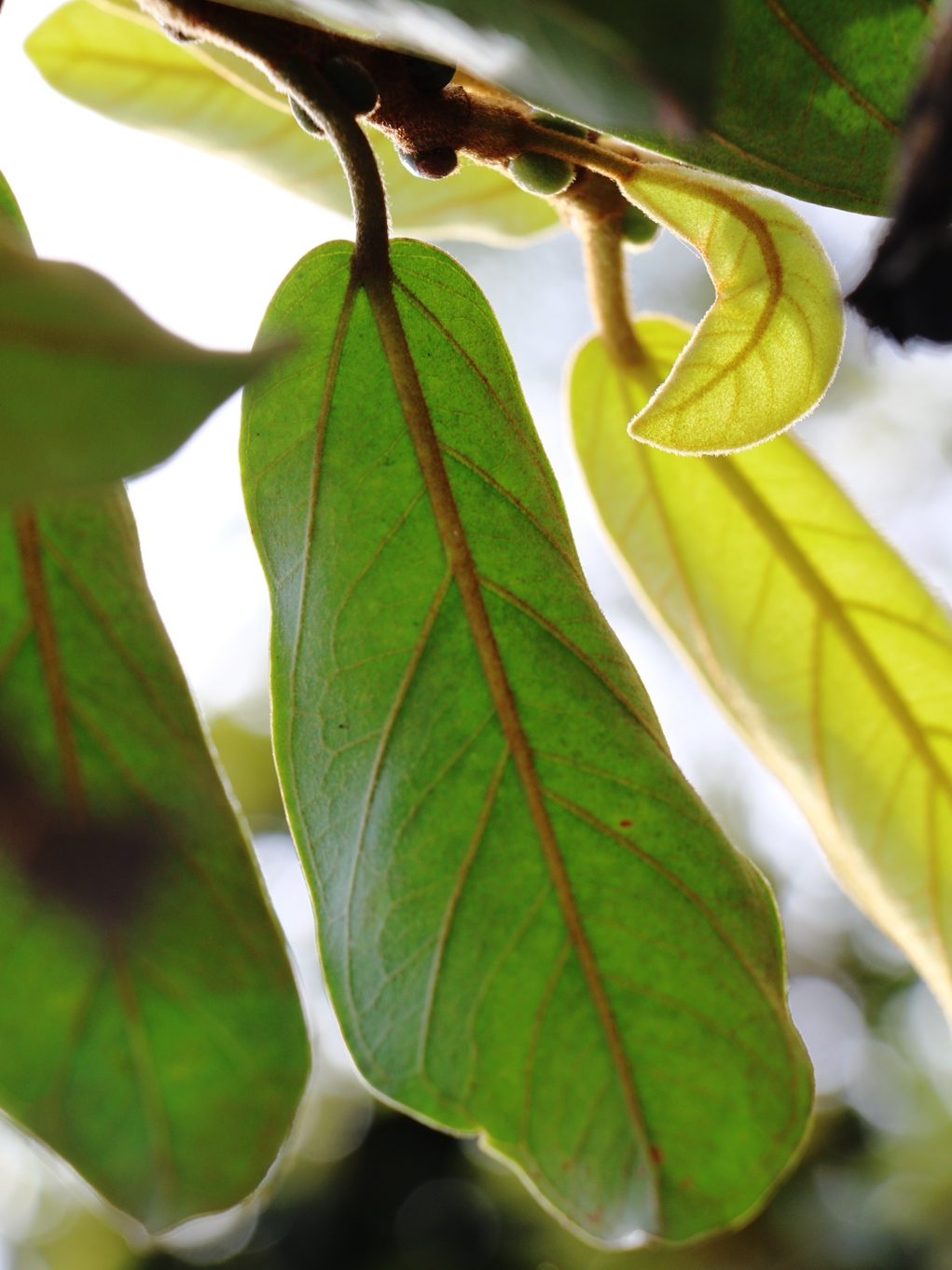
ABOVE : Ficus bracteata collected on a rocky forested ridge top at Sambas Gunung Sunujuh by the Kagoshima University expedition of 1994 to investigate the plants of West Kalimantan.
Note that the basal veins are relatively short and do not extend far up the leaf. See the photos of Ficus annulata and Ficus consociata at the bottom of this article for comparison. See also Ficus bracteata: Introduction
Herbarium illustration from Leiden NATURALIS.


The type collection of Ficus bracteata was first listed by Wallich (1847) based on a collection from Singapore in 1822. A more detailed description was given by Miquel (1867) A very similar fig collection by Forbes from Sumatra was illustrated in King (1888) as Ficus bracteata.
If my hypothesis that the type collection of Ficus bracteata represents a juvenile F. cucurbitina this means that Ficus bracteata as currently known is an invalid name but this needs additional data before it can be confirmed.
TAXONOMIC NOTES: The fig described as Ficus bracteata in Thailand (Simon Gardner et al 2018) Forest Trees of Southern Thailand appears to be a close relative of Ficus consociata and does not resemble the original type listing by Wallich (1847), description by Miquel (1867), illustrated by King (1888).